The first principle
Weather still lands on a real building.
The AI economy may be new, but the roof’s primary obligation remains brutally familiar: keep water out.
The data center issue
AI does not live in the cloud. It lives inside mission-critical buildings, and every one of them needs a commercial roof engineered, documented and serviced for consequences far beyond a routine leak.
The brief
The operating shift
Episode 010 moves artificial intelligence out of the abstract and into the physical campus: servers, power, cooling, weather exposure and a commercial roof above equipment that cannot afford interruption. Keith Bilous and John Kiesel follow that fact into qualification, redundancy, maintenance and the service systems required by mission-critical clients.
The sharper argument is not that every contractor should chase data-center work. It is that this construction wave raises the operating standard. John describes a market where communication, documentation and response are not back-office features; they are part of the roof assembly’s credibility.
Transcript pull
“The roofer’s gotta keep the water from coming in through the roof.”
Official chapter routes
Episode 010 · The watch desk
Each route enters the official Episode 010 replay at a transcript-verified timestamp. No new nugget videos were created for this issue.
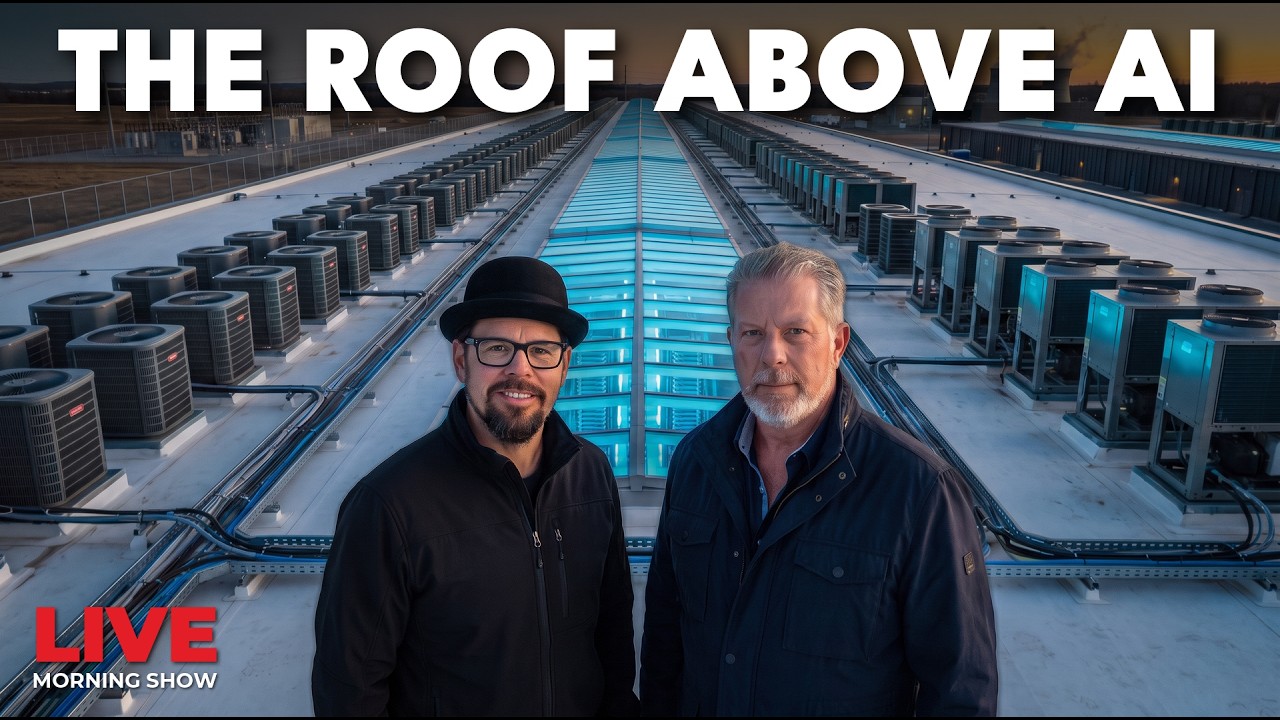 Opening question · 03:40The responsibility line · 03:40Who keeps weather off the intelligence?
Keith asks the foundational question; John answers that the work is collaborative, but the roofer still has to keep water out.
Watch from 03:40 ↗The risk desk · 08:14The roof stops being a small detail.The desk cites a high-value-campus claim and moves the conversation into edge metal, temporary protection, hail exposure and insurability.
Watch from 08:14 ↗The design table · 53:32Bring the contractor in before the price is fixed.Keith and John examine whether the roof should be treated as equipment—and why late contractor involvement can limit better decisions.
Watch from 53:32 ↗Watch the issue
Four pressures · one service system
Select a transcript-verified story to enter the official replay at that moment.
The first principle
The AI economy may be new, but the roof’s primary obligation remains brutally familiar: keep water out.
The scale question
The desk uses an attributed campus-cost estimate to show why membrane, edge metal, temporary protection and documentation move into risk strategy.
The envelope
The hosts connect heat, cooling redundancy, vapor barriers and sensors to the building envelope around high-density computing.
The contractor read
The strongest position is not simply being capable of installing the roof; it is being brought into design early enough to shape the decision.
John Kiesel · Division 7 Roofing
In the transcript, John is identified as President of Division 7 Roofing. He argues that data-center credibility depends on a multi-person system for response, communication, documentation and follow-through—not a single technician carrying the whole promise.
RolePresident, Division 7 Roofing
Episode lensMission-critical qualification
Operating standardService, evidence and response
Voices from the room
Transcript pulls
Three moments connect the data-center buildout to weather, consequence and the service organization behind the work.
The weather line
“Big buildings, more computers, same rain.”
The consequence
“That stopped being a roof bill fast.”
The service system
“A department is more than one person.”
The Field Edition
Get the next Tie-In Field Edition—its strongest ideas, exact moments and shareable field notes—when it is published.
The contractor read
John Kiesel · Operator perspective
Replay desk
Transcript-verified chapter map
Choose a chapter, replay the moment or continue through the complete show.
The final tie-in
The AI buildout creates physical campuses that commercial roofing must protect for decades. The opportunity belongs to contractors who can pair installation with qualification, documentation, redundancy and a service system built to respond when uptime is on the other side of the membrane.
“A service department is a service system.”
Next field edition
Subscribers receive the next issue first: the essential argument and the exact moments worth replaying.
Get the next issue →
Bring your story
Roof Talk with Blair Sutton
Bring the decision, the job or the operating lesson that changed how you work.
Primary question: What does the AI data-center construction boom require from commercial roofing?
Published: September 10, 2026. Runtime: 1:18:10. Publisher and stated sponsor: Division 7 Roofing. Network: Roofing Authority Network. Program: The Tie-In.
Featured voices: Keith Bilous and John Kiesel, with scripted desk segments from Michelle and Randy. Topics: AI data centers, mission-critical roofing, qualification, service systems, documentation, redundancy and contractor risk.
Transcript corpus: 14,880 words across 429 timestamped speaker turns, from 00:00:00 through 01:18:10. Speaker labels were normalized for known production names: Michelle and John Kiesel.
Source boundary: Episode facts, quotations, chapter order and timestamps are verified against the completed Descript transcript and official replay. News-desk statistics, lawsuit details and biographical statements remain attributed to the speakers because this issue does not independently verify them.
Official Episode 010 replay · Machine-readable Episode 010 transcript · Field Edition archive
The completed, speaker-labelled Episode 010 transcript from the final Horizontal Stream project in Descript.
The official Episode 010 YouTube livestream.
Open replay ↗The issue hero and chapter routes use the official Episode 010 YouTube thumbnail. Existing approved RAN host and cast assets carry the recurring magazine structure.
Quotes, timestamps and the complete chapter map are grounded in the transcript. The transcript covers 00:00:00–01:18:10; a trailing pause precedes the final word. No new nugget videos were created or queued.